

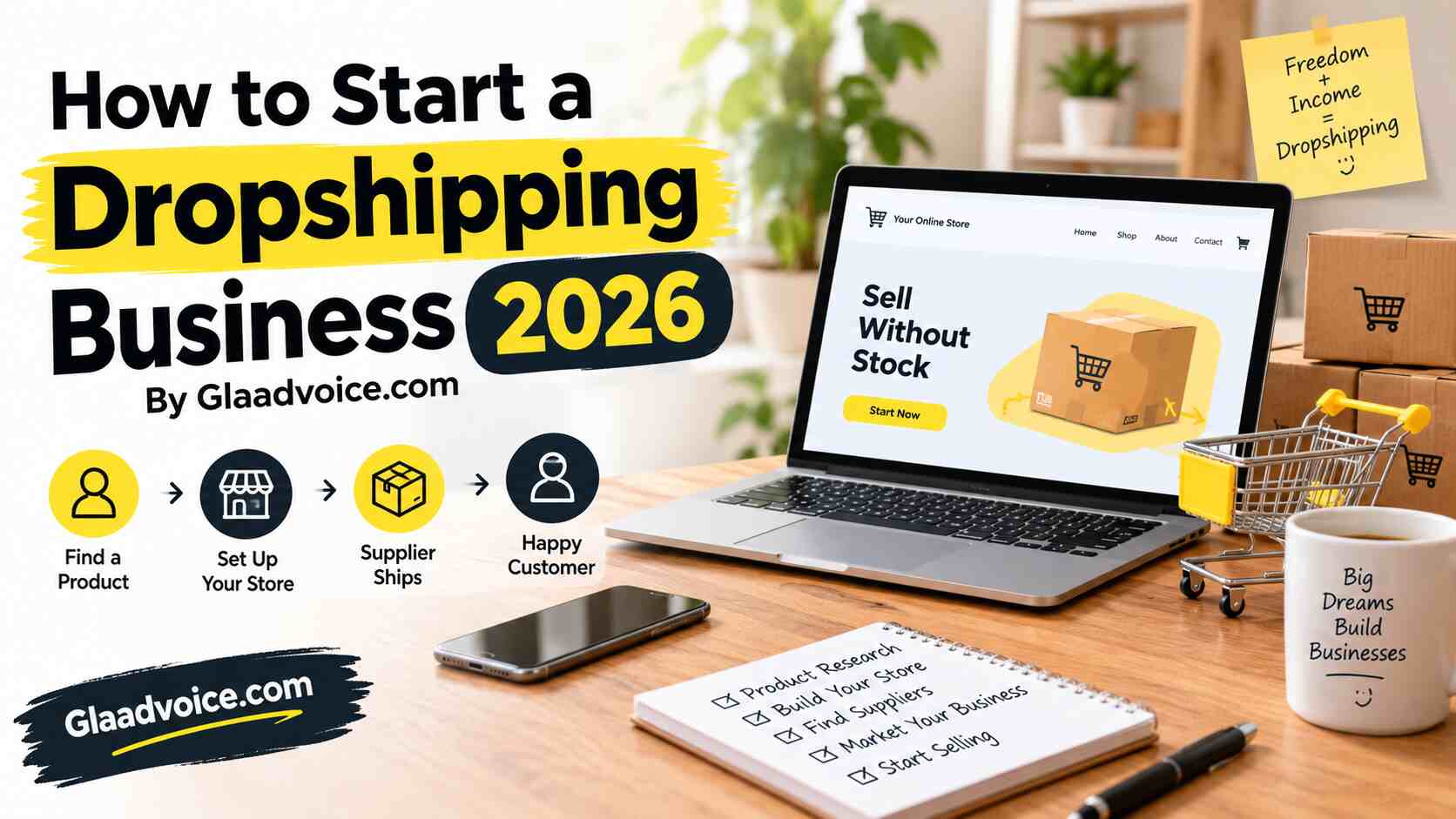
How to Start a Dropshipping Business 2026 By Glaadvoice.com
Learn how to start a dropshipping business in 2026 with our simple step-by-step guide. Turn your e-commerce dreams into reality, start selling without inventory hassle.
It can be challenging to get your online business up and running at first. You may think you need a warehouse, a large budget, and a lot of products. Dropshipping does not allow such a thing.You can start selling products online, not with the need to have them in your own stock. Supplier prepares and sends the product directly to the customer as soon as an order is placed.This is one of the advantages of dropshipping over the traditional retail business. But it is still a development in need of research, planning and customer service.
The first step to starting a dropshipping business is to select a niche. What you then need are good suppliers, easy online stores, transparent pricing and a marketing strategy.
What Is Dropshipping?
Dropshipping is an online retail system, in which you sell products with no requirement of storing them yourself. You have products for sale on your website. That one of those products is purchased by a customer from you. The details of the order are then transmitted to your supplier. Packaging and shipment to the customer done by the supplier.
You’re responsible for the shop, sales, pricing and service of customers. The supplier responsible for the majority of the physical delivery. The model is able to decrease initial inventory expenses. However, it will not eliminate business expenses. There’s still a domain price, platform, samples of their products, apps, payment processing and marketing.
How Does a Dropshipping Business Work?
It’s easy to do.
- Choose a niche and products.
- Find a drop shipping provider.
- Add products to an ecommerce site.
- Set your prices.
- Promote your store.
- A customer orders something.
- Ordering is sent to your supplier.
- It is shipped by the supplier to the customer.
- You support and monitor the process of the order.
Your profit is from the difference between your selling price and your total costs.
That is why pricing and supplier selection matter so much.
Also Read : Glaadvoice com
How to Start a Dropshipping Business Step by Step
1. Choose a Profitable Niche
The first thing you need to do is select a niche. Niche is a particular section of the market. It aids you to focus on a specific kind of customer. Don’t push all the products in one establishment. A successful brand and a marketing strategy are easier to develop in a focused store.
You could target, for instance:
- Pet accessories
- Home organization products
- Fitness accessories
- Travel products
- Beauty tools
- Kitchen accessories
- Phone accessories
- Avoid picking a niche that seems to be popular at the moment.
Determine if customers are interested in its products or not. Check out Google Trends, online marketplaces, social media and competitor stores. A niche that has a demand is a niche that requires products and there should be sufficient products to be made into a useful catalog.
2. Research Your Products
Having a niche, you’re after products which match your target viewers. Seek out products that are able to address an actual problem. As with most types of marketing, products that are easy to show work well in video marketing.
Before selecting a product, consider a number of factors:
- Selling price
- Supplier price
- Shipping cost
- Expected delivery time
- Product reviews
- Return conditions
- Competition
- Product quality
Don’t rely on just a product’s popularity.
Once a product goes viral, it can be in demand for a few weeks before it suddenly stops. Look for products that have a purpose and have ongoing interest.
3. Study Your Competitors
Do not make costly errors by doing competitor research. Look up any shops selling products similar to what you are looking for. Look at their websites, prices, product description, offers and their customers’ reviews.
Listen to “complaints” as well.
Reviews can indicate issues regarding product quality, delivery, packaging, and/or customer support. These issues can assist you to identify means to enhance your very own shop. It’s also a good idea to look at their social media posts.
Check out the kind of videos they publish. See which products are covered. Next, consider what your shop might have to offer that is unique. It might be your content, it might be the information about your product, it might be your product bundles, it might be your speed of delivery, or your customer service.
4. Secure a Dependable source
Your supplier makes an impact on your customers’ experiences. Late delivery, damaged goods, incorrect orders, and stock issues are all potential issues caused by a poor supplier. Check with research suppliers before providing their products in your store. Check their reviews and shipping information. Check out return and refund policies.
Also, ordering samples is beneficial.
A sample enables you to see the real thing before you put it on the market. You can view its quality, packing box, size, and delivery time. Maintain a surplus of two or more suppliers of critical supplies, if possible. This is another place where you can find some relief if you have an issue with your primary supplier having stock or shipping issues.
5. Calculate Your Costs and Set Prices
Please do not double the supplier’s price to set the price. You’ll have to determine your total expense.
You can expect the costs such as:
- Product cost
- Shipping
- Store fees
- Payment processing
- Apps or software
- Advertising
- Product samples
- Taxes
- Refunds or replacements
Suppose the product you’re getting from your supplier is $15. Shipping costs $5. The rest of your expenses are an additional $5.
The cost of just the basics is already $25.
After advertising and other costs, you might have a remaining amount that is too low to make a profit on the sale of the product if you have sold it at $30.
Good pricing should allow for operating expenses, and profit.
Don’t forget to check the prices at other stores that sell the same item. It takes a strong justification for a high price. A customer should be aware of what he/she receives for his/her payment.
6. Create Your Online Store
Now it is possible to make your store. For those who don’t have a knack for coding, platforms like Shopify and Wix can be helpful in creating an ecommerce website. Opt for a basic store layout.
The following information should be found on your product pages:
- Clear product titles
- Use of original or useful product images.
- Simple descriptions
- Product specifications
- Shipping information
- Return information
- Frequently asked questions
- Do not copy the supplier’s description.
Create content that conveys the product in a manner that your customers can understand.
Don’t forget a store that is mobile-friendly, too. A lot of consumers shop around and purchase on their cell phone.
7. Set Up Payments, Shipping, and Policies
Test to ensure that customers are able to easily place an order before launch. Include payment options of your target market. Then you can configure your shipping rules.
Communicate clearly on time of delivery. Don’t guarantee delivery dates that your supplier is unable to meet. It’s a good idea to make simple store policies as well.
These can include:
- Shipping policy
- Return policy
- Refund policy
- Privacy policy
- Terms and conditions
This will be determined by your specific legal needs depending on the location of the businesses and the sales locations. Review the rules for your area and patrons.
8. Register your Business and Organise Money Matters
The legal entity of a dropshipping Business will rely on your situation and country. There are some sellers that are running their businesses as a solo prop. Other people form a limited liability company or some other type of business entity. There may be a requirement for businesses to be registered, tax registered and/or have local permits.
You will not be exempt from your tax obligations just because your business is a drop shipping business. Separate business vs personal funds, if possible. The other advantage of having a separate business account is that it will be easier to keep track of the income and expenses. Maintain payment records for suppliers, advertising expenses, platform expenses, refunds and sales.
By having good records, you will be able to determine the profitability of your store.
9. Market Your Dropshipping Store
If they don’t know of a store, they can’t make purchases. One of the key areas of learning how to start a dropshipping business is marketing.
A number of channels can be used.
Social Media Marketing
Short videos can demonstrate the working of a product. You can utilize social media platforms like TikTok and Instagram to showcase products and publish brand content. Avoid using all of your posts as a sales pitch. Demonstrate problems/solutions, product uses, comparisons and real life scenarios.
Search Engine Optimization
Your store can show up in the search results with the help of SEO. Utilize effective keywords in product titles, product descriptions, category pages and helpful blog posts. Create informative articles to reply to customer enquiries.
SEO typically requires a period of time. However, it can attract traffic without a cost per click.
Influencer Marketing
Small creators have their use for niche products. Search for producers who have a customer base similar to your own. Don’t select a person as a follower just because they have lots of followers. The audience’s relevance and engagement is also important.
Email Marketing
Email is a great way to stay in touch with customers. It could be used to inform people about their orders, product announcements, special offers and abandoned cart reminders. Repeat customers can be an important growth strategy for the long term.
Common Dropshipping Mistakes to Avoid
Many of the same faults are committed by new sellers.
Choosing Products Without Research
One product can be very interesting but have minimal demand for it. Be sure to look at the market before making any decisions on buying or selling.
Using an Unreliable Supplier
If a customer doesn’t get the product they ordered in a timely fashion or it is of poor quality, the product isn’t useful. Research the suppliers prior to product listing.
Copying Competitors
A mere copy of another store won’t make a great brand. Research opponents to get ideas. Then develop a product presentation and customer experience of your own.
Spending Too Much on Ads
Do not invest a big capital in the product before testing it! Start small. Track the results. Don’t spend more than is necessary.
Ignoring Customer Service
The supplier can send the product, however, the customer will see your brand. Answer questions clearly. Provide tracking details. Handle complaints professionally. It’s a fact that with good support, a first-time buyer can become a second time buyer.
How much money do you have to get underway?
Its price is determined by the setup. You might require financing for a domain, an ecommerce system, merchandise samples, apps, payment charges, and marketing.
With dropshipping, you will not have to buy products in bulk, which will help save money. It is not all free however. It can be beneficial to have a small testing budget. Provides an opportunity to evaluate products and marketing campaigns with a limited financial investment.
The initial task you want to get down is to find out what works. Don’t just concentrate on making sales. Be sure to keep your expenses monitored as well.
How to Grow a Dropshipping Business
Once the business begins to generate regular sales, seek opportunities to enhance the business. These additional products are able to be added to your store. Product pages are something that can be improved. You can develop better content.You can develop better content. You can test out new marketing avenues, also. Pay attention to your data.
Monitor view, add-to-cart and sales for products. Look into your customer’s source. Eliminate products that don’t work well. Continue to develop products and channels that are effective.
It’s also possible to establish a better brand identity with your niche over time, rather than relying on the hottest trends to bring in some website visitors.


One Comment